The $96K-$156K Hiding In Your Network
September 20, 2026
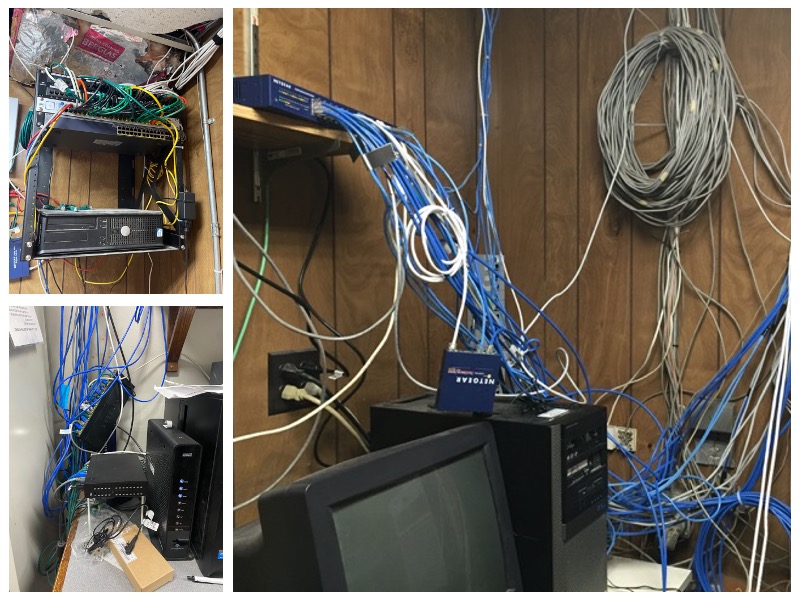
Most Ace stores didn’t set out to build a “hodge-podge” of technology. It happened one vendor, one quick fix, and one workaround at a time, until the network holding it all together became the thing nobody wants to touch.
Sometimes the direct line between solid, reliable technology and results at retail isn’t immediately obvious. Let’s take a look at five ways the tech can have a dollars-and-cents impact on your business.
1. Inventory accuracy may be a network problem.
Ten to fifteen years ago employees still knew how to take inventory on paper. Now, without directed Mango counts and a Zebra scanner in-hand, inventory management doesn’t happen. When your store gets two Ace deliveries per week, there are only a couple days each week when stocking is complete and accurate counting or shooting outs can occur. If Mango reports don’t get loaded or if the Zebra scanner won’t stay connected to Wi-Fi, employees move-on to other tasks and outs persist. Another direct impact is pricing accuracy. When Zebra scanners and printers don’t reliably connect to the network price changes and promotions don’t get tagged and profit margins are impacted. None of this is a training issue for your employees, it is a coverage and reliability issue with your network.
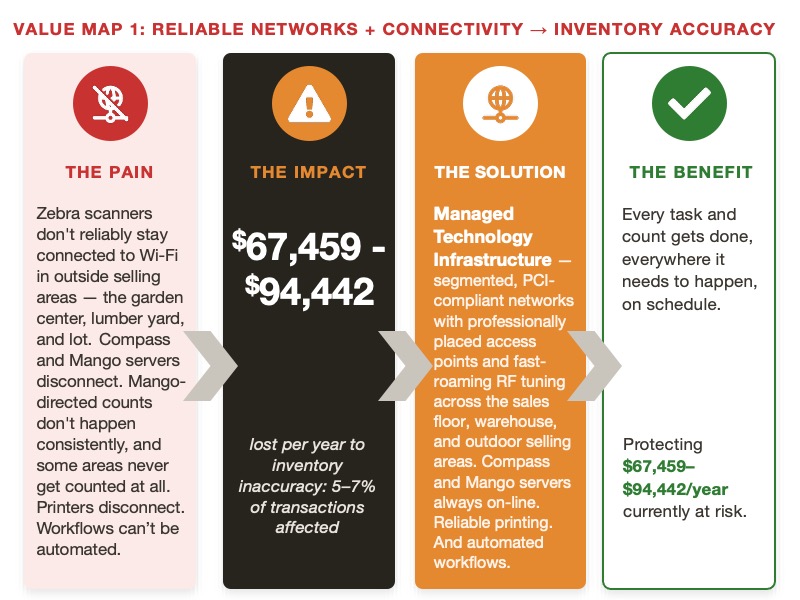
Ace tracks the cost of a single “out” at 58 cents a day. Run that against a typical Pinnacle-tier store, with 5–7% of transactions affected, and it adds up to $67,459–$94,442 lost per year to inventory inaccuracy alone.
The fix is a properly segmented, PCI-compliant network with access points professionally placed and RF-tuned for the sales floor, warehouse, and outdoor selling areas, so Compass, Mango, and Zebra handhelds stay online and workflows can actually be automated. And it’s the same backbone that “Ask ARMA” AI, Vusion electronic shelf labels, and X-Hoppers headsets will need next, so it’s not a one-time fix — it’s the platform your next five+ years of technology gets built on.
2. A locked-down firewall is costing you twice.
If you’ve moved to Epicor’s cloud-based Eagle or Propello, your store now depends entirely on its internet connection — and Epicor’s leased Sonicwall firewall doesn’t give you or your IT provider admin access. That makes failover hard to configure and outages hard to diagnose and resolve.
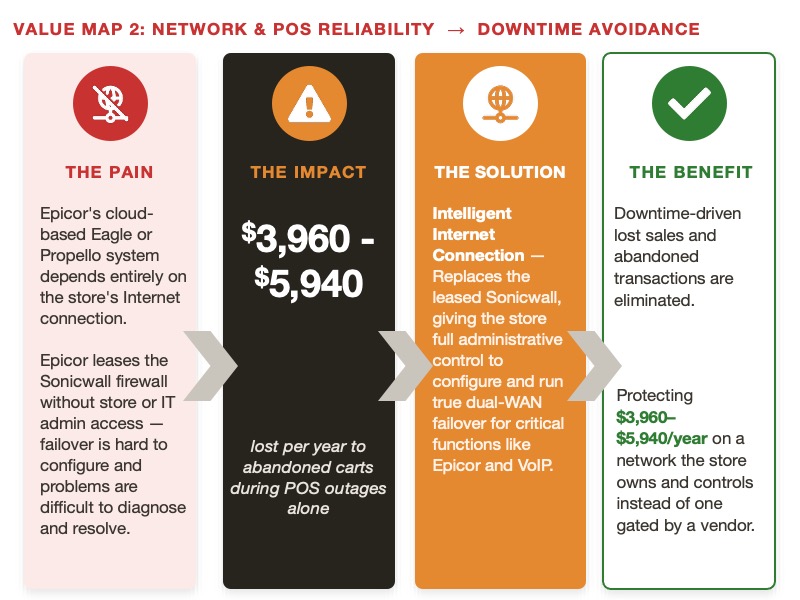
When POS goes down, customers abandon carts. That’s $3,960–$5,940 lost per year in abandoned transactions alone. On top of that, a firewall device that you own combined with a managed, intelligent internet connection can save $950 per store per year versus a Sonicwall lease.
The solution is an Intelligent Internet Connection configured to run dual-WAN failover for critical connections like Epicor and VoIP running through a firewall device that you own and control.
3. Customers who go unhelped spend less.
Helpful in-aisle service is increasingly reliant on handheld technology. Your associates use Eagle Mobile Plus and the Ace Retailer Mobile App (ARMA) to identify products and find their location in the store. With the advent of “Ask ARMA” and future AI-based tools this reliance will only grow with time. These tools become an indispensable crutch to all employees.
Ace’s statistics are that 40% of customers get no in-store help at all, and only 7% get helped in the aisle. If customers who get helped spend an average of $4.29 more per transaction between $17,187 and $42,968 of revenue is left on the table every year when associates aren’t properly enabled to give helpful service.
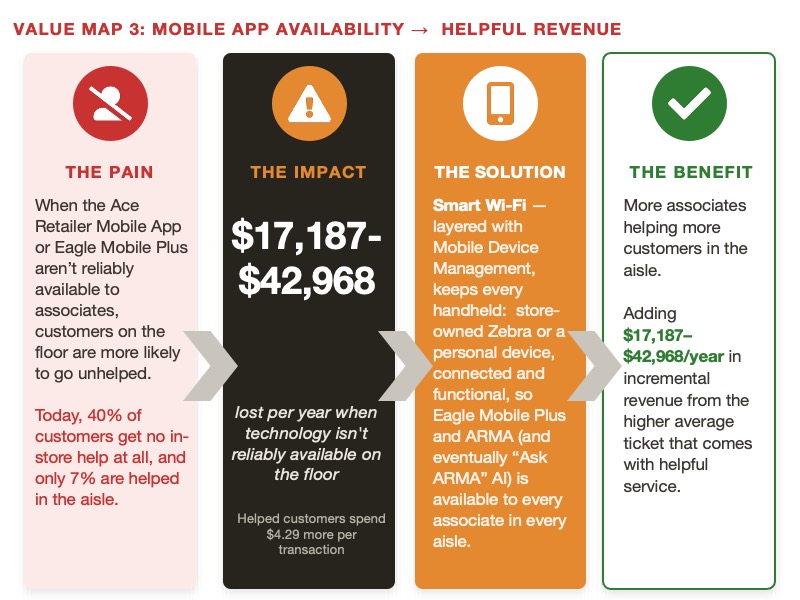
The fix is a smart Wi-Fi network and mobile device management (MDM), so every handheld whether a store-owned Zebra or a personal device, stays connected and functional. That’s also the exact layer “Ask ARMA” AI and tools like X-Hoppers smart headsets will run on, so solving it now means you’re ready for what’s coming next, not rebuilding for it later.
4. One broken tinter can take your paint department offline.
Many Ace stores run their entire paint department through a single paint auto-tinter with no backup. When it goes down due to a network issue, a device failure, a power problem the store can’t mix paint until it’s fixed, and paint is one of the highest-margin, highest-traffic departments in the store. At $37.50 an hour in average paint sales, even two hours of downtime a month adds up to $3,600–$5,400 lost per year — more at busy or B2B-heavy stores.
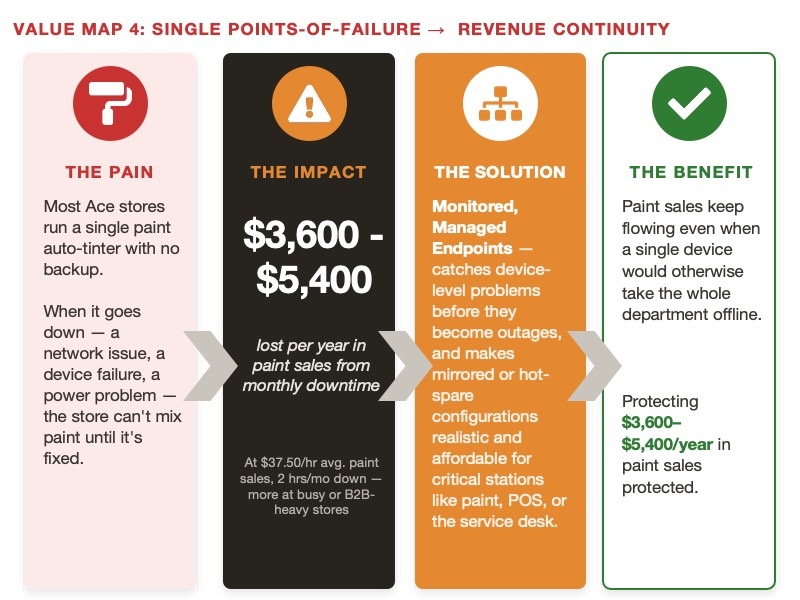
The practical fix isn’t a spare tinter which usually can’t be justified based on sales volume – it is the same monitored, managed endpoint approach we recommend everywhere in the store. After all, most auto-tinter downtime arises from computer and software issues versus the mechanical operation of the tinter. When a device-level problem is caught before it becomes an outage, mirrored or hot-spare configurations become realistic and affordable for critical stations like paint, POS, or the service desk.
5. Without a single accountable technology partner, you become the IT department
Coordinating vendors. Personally troubleshooting printers, POS issues, Wi-Fi, and passwords. It’s not written into any job description, but it becomes the owner’s job anyway.
Between printers and scanners, POS and computer issues, Wi-Fi and network downtime, email and password problems, and vendor coordination, we consistently see owners spending 2–3 full workdays a month on technology — that’s 168 to 276 hours a year. What is your time worth? At even $50 an hour, that’s $8,400–$13,000 a year in lost time. And that’s before counting the downtime, staff frustration, or lost sales that come with it.
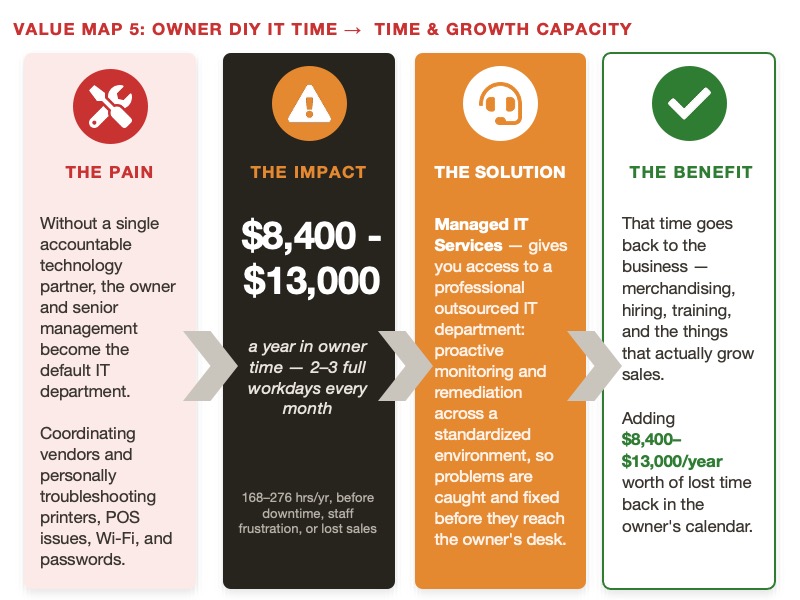
You already outsource other parts of the business this way — accounting, bookkeeping, payroll. Managed IT Services works the same way: proactive monitoring and remediation across a standardized environment, so problems get caught and fixed before they land on your desk. Unless you’re running ten or more stores, a full-time IT hire rarely makes financial sense — and even when it does, one person is a single point of failure who rarely documents their own work and is hard to keep long-term.
Your time goes back to what actually grows the store — merchandising, hiring, training, and your customers!
Across all five Value Maps we’ve shared above, that’s real, measurable dollars — $97,000 to $156,000 per year — most of it never shows up as a line item, so most owners never go looking for it.