Planning a New Ace Store or Elevate Remodel?
November 12, 2026
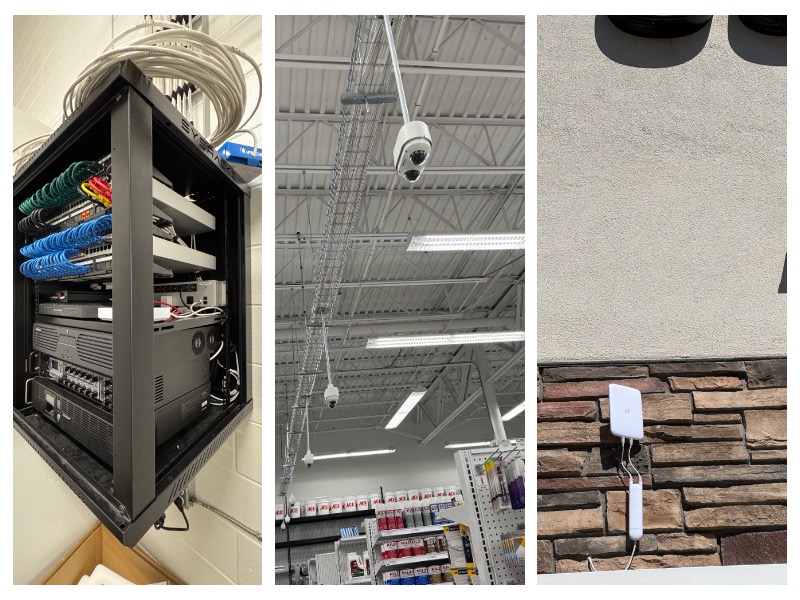
Make Your IT Partner Part of the Project Team
A new store, store conversion, or an Elevate remodel is one of the biggest investments an Ace owner will make. Fixtures, layout, and merchandising get months of planning. Technology often gets a few phone calls near the end.
We see it in our own project pipeline. DilSe.IT is frequently called after the Epicor order is placed, the phone and camera vendors are chosen, and the electrician has started running low voltage. We can install and support what was bought, but the best opportunities to save money, improve security, and plan for the future have already passed.
This article explains why your IT partner belongs on the project team from day one, and what DilSe.IT does when we get that seat.
Technology pays dividends long after the grand opening
The network, Wi-Fi, computers, and devices installed during a store project typically stay in place for 5 to 10+ years. Every one of those years, they either help your team sell or get in the way.
DilSe.IT’s value analysis for a high-performing Ace store estimates that reliable, well-designed technology protects $97,006 to $156,350 per year:
| Where technology pays back | Estimated Annual Value |
|---|---|
| Accurate inventory, because handheld counts get done everywhere, including the garden center, lumber yard, and lot | $67,459 to $94,442 |
| More helpful service when the Ace Retailer Mobile App works reliably in the aisle | $17,187 to $42,968 |
| Abandoned carts avoided when POS stays online through an Internet outage | $3,960 to $5,940 |
| Owner time no longer spent troubleshooting printers, Wi-Fi, and passwords | $8,400 to $13,000 |
None of those returns depend on buying the most expensive equipment. They depend on designing the store’s technology as one system instead of a collection of separate vendor installs.
Our four priorities for every store project
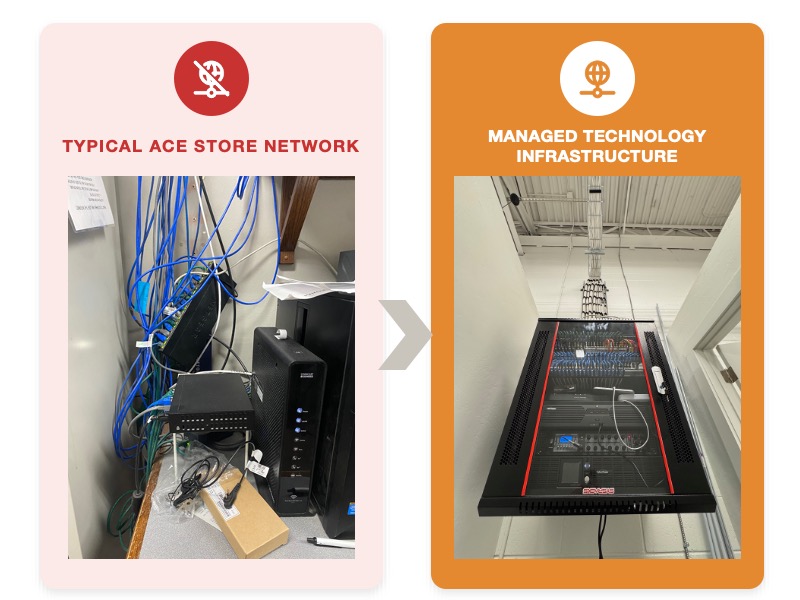
- Work within your budget. We compare your options line by line: what to buy, what to lease, and what you do not need. An owned firewall in place of a leased one can save up to $950 per year per store. One 3-store Ace customer reduced annual phone costs from $16,762 to $7,190 after moving to VoIP service, a savings of $9,572 per year.
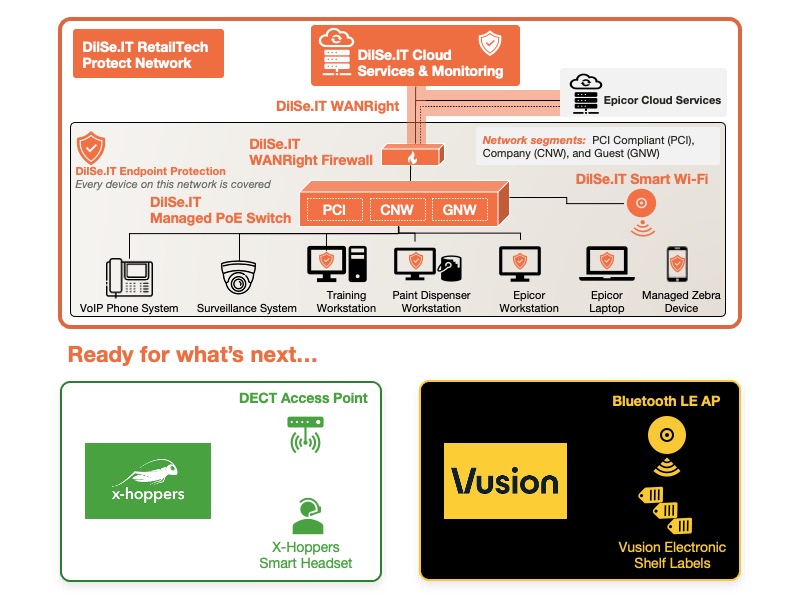
- Make sure you are cyber secure. Independent retailers are frequent targets, and the average cyberattack on a small business costs $25,000 to $30,000. We design every store with a segmented, PCI-compliant network that separates credit card systems, company devices, and guest Wi-Fi. Endpoint protection covers every computer and handheld, not only the devices connected to your POS system.
- Use standardized, commercial-grade technology. Consumer-grade equipment and one-off vendor networks are the source of most of the IT fires we see in Ace stores. We standardize on managed network switches, professionally placed and tuned Wi-Fi, Dell Pro workstations built for 5 to 7 years of service, and a single platform for cameras, networking, and access control with no monthly camera subscription. Standardization also means faster support, because we know exactly how your store is built.
- Make sure your technology enables your business. Your network should be ready on opening day for the technology Ace stores are adopting now: electronic shelf labels, smart headsets for staff, AI tools in the Ace Retailer Mobile App, and online orders picked and delivered from your store. Planning for these during construction costs far less than retrofitting later.
The decisions worth making together
During a store project, owners face a long list of technology choices, often from different vendors who never talk to each other. We help you compare them side by side:
- POS and Epicor services: what you need from Epicor, what can be sourced elsewhere, and the trade-offs of each option
- Internet and backup connections: how to keep POS, phones, and devices online if your primary provider goes down
- Cabling and the network rack: enough drops in the right places, with flexibility to expand in the future so you never need a switch hidden under the paint counter
- Wi-Fi: coverage for the sales floor, warehouse, and outdoor selling areas
- Phones: VoIP versus traditional lines, and desk, cordless, or Wi-Fi handsets
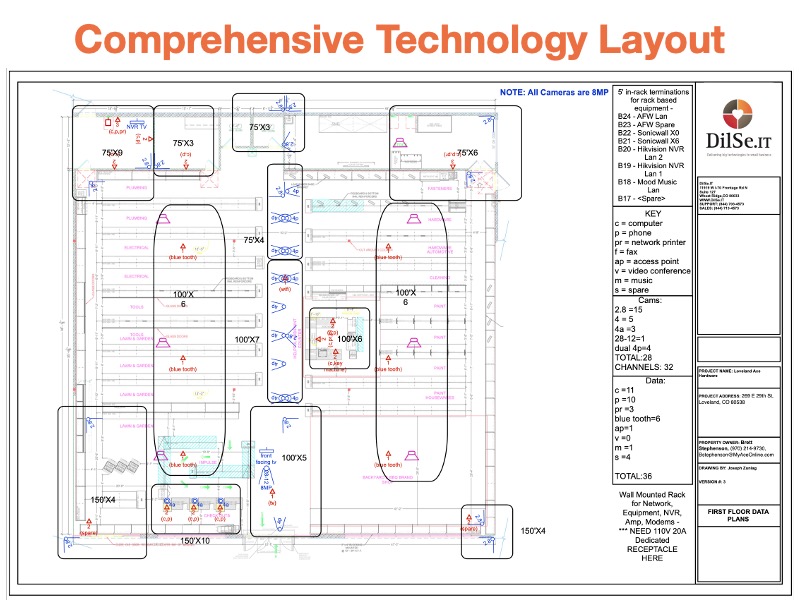
- Surveillance: camera count and placement, local storage versus cloud, and ongoing fees
- Computers and handhelds: standardized models and the true annual cost to operate them
- Electronic shelf labels: the in-store access points and the integration with your POS pricing
When to bring DilSe.IT in
- When you start planning the project. A short planning session sets the technology scope and budget alongside everything else.
- Before you sign your POS hardware and services order. This is where the largest buy-versus-lease decisions sit.
- Before low-voltage cabling is bid. Cable runs are easy to add before walls close and fixtures are set. They are expensive after.
- Before phone, camera, and other vendors are selected. No matter what vendor you choose, every system should land on one secure, managed network.
Why DilSe.IT
DilSe.IT supports independent Ace Hardware retailers and is Ace’s cybersecurity training partner. From our CEO who operated Ace stores for 17 years, to our CTO who has designed and supported Ace stores for 16 years, to the many members of our team who’ve got extensive Ace experience, we know how many decisions land on an owner’s desk during a store project, and technology is too often the one decided last.
Schedule a free RetailTech Planning Session
If you are planning a new store, store conversion, or remodel, contact us at the beginning of your project. We will review your plans, your POS quote, and any vendor bids, and give you a clear recommendation built around your budget.